The latest version of WordPress, 6.6, comes with exciting new features and enhancements designed to make website building faster, easier, and more powerful. Whether you are a developer, a website owner, or a blogger, WordPress 6.6 brings something new to the table. Let’s explore some of the key benefits and features this update offers.
Why Do I Need To Upgrade?
Upgrading to WordPress 6.6 is essential to keep your site secure, fast, and user-friendly. The update brings critical security patches, ensuring your site is protected from vulnerabilities. It also improves performance with faster loading times and optimized block rendering, enhancing both user experience and SEO. New blocks and features, like enhanced full site editing, make content creation and customization easier. Plus, accessibility improvements help ensure your site is inclusive to all users. Staying updated means future-proofing your site with the latest tools, security measures, and performance enhancements.
WordPress 6.6 takes full site editing to the next level with several improvements that give users more control and flexibility over their website’s design and layout. The enhanced Block Editor makes it easier to create complex page layouts without touching code. With better tools for managing templates, reusable blocks, and block patterns, even non-technical users can build visually stunning websites effortlessly.
Key Highlights:
Custom Template Parts: You can now create and manage custom template parts with greater ease, allowing for more modular and customizable website designs.
Improved Navigation Block: Building menus is more intuitive, and the new version offers smoother editing of navigation blocks for creating complex site structures.
Global Styles: More control over fonts, colors, and spacing allows for consistent branding across pages.
2. Performance Boosts for Faster Sites
With every new WordPress version, performance is a priority, and WordPress 6.6 is no exception. Speed is crucial for both user experience and SEO, and this update brings a series of optimizations that make your site load faster.
Performance Enhancements:
Improved Lazy Loading: Image lazy loading is now more efficient, leading to faster page load times and better resource management.
Optimized Block Rendering: The Block Editor has been optimized to reduce the amount of JavaScript being loaded, resulting in faster editing experiences.
Reduced Database Queries: By reducing the number of database queries on certain actions, WordPress 6.6 helps reduce server load, improving overall site performance.
3. New and Improved Blocks
As the Gutenberg editor continues to evolve, WordPress 6.6 introduces new blocks and improves existing ones, making content creation more intuitive. The new blocks provide more ways to display content, while existing blocks have been enhanced to offer more customization options.
Block Improvements:
Table of Contents Block: This new block automatically generates a table of contents from your headings, making it easier for visitors to navigate long articles or pages.
Advanced Query Loop Block: For developers and power users, the Query Loop block now supports even more customizations, offering fine-tuned control over how posts are displayed.
Improved Gallery Block: The updated Gallery Block allows for individual image styles within the gallery, making it easier to create unique, eye-catching galleries.
4. Accessibility Improvements
WordPress 6.6 has also focused on making websites more accessible, ensuring that everyone can use and interact with your site regardless of their abilities. The new features aim to enhance the browsing experience for users with disabilities.
Accessibility Features:
Screen Reader Enhancements: Improvements to block navigation and focus management help screen readers provide a better experience for visually impaired users.
Keyboard Navigation Improvements: WordPress 6.6 makes it easier to navigate through the Block Editor using only a keyboard, improving accessibility for users with motor disabilities.
ARIA Landmark Roles: More ARIA landmark roles have been added to blocks, making it easier for screen readers to identify key sections of your content.
5. Developer-Centric Features
For developers, WordPress 6.6 comes with several under-the-hood improvements that enhance flexibility and provide better tools for building advanced custom websites and themes.
Developer Highlights:
New Hooks and Filters: Developers have more hooks and filters to work with, allowing for greater customization of theme and plugin functionality.
Block API Enhancements: WordPress 6.6 introduces more options for customizing the block editor experience, allowing for better integration with third-party plugins.
Enhanced REST API Support: Updates to the REST API make it easier to interact with external systems and services, which is particularly useful for headless WordPress setups.
6. Security Enhancements
Security is always a top priority, and WordPress 6.6 includes several security improvements to ensure your site stays safe from threats. From better password management to security fixes in the core, this version is more secure than ever.
Security Features:
Enhanced Password Hashing: WordPress 6.6 uses stronger password hashing algorithms, adding an extra layer of security to protect user credentials.
Improved User Session Management: There’s more granular control over user sessions, making it easier to log out users from specific devices or browsers for better security management.
Automatic Security Patches: With WordPress 6.6, you’ll continue to receive automatic updates and security patches, reducing the risk of vulnerabilities in your site.
Conclusion
WordPress 6.6 offers a wealth of new features and improvements that enhance usability, performance, accessibility, and security. Whether you’re a content creator, developer, or website owner, these updates ensure you can build and maintain a faster, more secure, and flexible WordPress site. The new blocks, performance enhancements, and developer-centric tools provide a modern and powerful content management experience.
Stay ahead of the curve by upgrading to WordPress 6.6 today, and experience these exciting new features for yourself!
When running a website, selecting a reliable web hosting provider is crucial, but often, basic hosting plans alone may not meet all your website's needs. Addon web hosting products provide extra layers of security, performance, and peace of mind. Below, we explore the key benefits of three essential addons: SiteLock Security, WordPress Management Packages, and Spam Protection.
1. SiteLock Security: Safeguard Your Website from Threats
What it is:SiteLock is an all-in-one security solution designed to protect your website from cyber threats. It offers features like malware scanning, vulnerability detection, and automatic malware removal.
Benefits:
Protection Against Malware: SiteLock scans your website daily for malware, ensuring that any threats are identified and eliminated before they cause harm.
Vulnerability Detection: The service continuously checks for vulnerabilities in your website’s code, plugins, and applications, notifying you of any weaknesses that hackers might exploit.
Improved Trust and Credibility: With SiteLock's security badge displayed on your site, visitors are assured that your website is safe, leading to higher trust and credibility.
Automated Fixes: SiteLock not only detects issues but also automatically fixes them, saving you time and effort while maintaining your site's security.
Why use it? In today's digital landscape, cyberattacks are increasingly common, and a single breach can result in data loss, financial damage, and loss of customer trust. With SiteLock, you’re not only protecting your business but also building a safer environment for your visitors
What it is:WordPress Management Packages offer professional services to keep your WordPress website running smoothly. These packages typically include updates, security checks, backups, and performance optimization.
Benefits:
Automatic Updates: Stay up-to-date with the latest WordPress core, theme, and plugin updates, ensuring your site is secure and functions properly.
Security and Backups: Regular backups and security monitoring protect your website from data loss and hacking attempts.
Performance Optimization: Managed WordPress services ensure that your site remains fast and efficient, improving user experience and SEO performance.
Time Savings: By outsourcing the management of your WordPress site, you can focus on your business while the experts handle the technical side.
Why use it? For business owners and individuals who lack the time or technical expertise to manage a WordPress website, these packages offer peace of mind. By leveraging professionals, you avoid downtime, reduce risks, and keep your website in top shape without lifting a finger.
3. Spam Protection: Keep Your Inbox and Website Clean
What it is: Spam Protection services, like Hosting Australia's SPAM Protect help to filter out unsolicited emails and spam comments, protecting your email inbox and website from unwanted clutter and potential security threats.
Benefits:
Email Filtering: Spam protection filters your incoming emails, ensuring only legitimate messages land in your inbox, reducing the risk of phishing attacks.
Website Comment Filtering: The service blocks spammy or malicious comments, preventing bots from flooding your website with unwanted content.
Enhanced Productivity: By eliminating spam, you can focus on important tasks without being distracted by junk mail or irrelevant website comments.
Improved Website Security: Spam is often a gateway for phishing attempts and malware, so effective spam protection reduces these risks.
Why use it? Spam can be more than just an inconvenience—it can expose you to serious security risks. Spam protection ensures that both your inbox and website remain free from unwanted content, enhancing your overall security and productivity.
Conclusion: Boost Your Website's Security, Performance, and Efficiency
Addon web hosting products like SiteLock Security, WordPress Management Packages, and Spam Protection are more than just extra features—they are essential tools to ensure your website runs smoothly, securely, and efficiently. By investing in these products, you’ll protect your site, streamline your operations, and ultimately provide a better experience for your visitors.
Need to learn more? Check out these addons on Hosting Australia's website and take your web hosting to the next level.
WordPress powers a significant portion of the internet, making it a prime target for hackers and malware. One of the most vital steps in maintaining your WordPress website is regularly updating the core software and plugins. Yet, many website owners overlook this critical task, either due to time constraints, lack of expertise, or simply being unaware of its importance.
The Importance of Updating WordPress
Security Enhancements
Every new version of WordPress comes with security patches that fix vulnerabilities discovered in previous versions. Hackers are constantly finding new ways to exploit outdated software, and running an older version of WordPress leaves your site exposed. Updating to the latest version of WordPress is your first line of defense against cyber threats.
New Features and Functionality
WordPress updates aren’t just about security; they also introduce new features and improvements that enhance your website’s functionality. These updates can include new themes, plugins, and tools that make your website more efficient and user-friendly. Staying updated ensures you’re taking full advantage of what WordPress has to offer.
Bug Fixes
No software is perfect, and WordPress is no exception. Each update addresses bugs that were found in previous versions. By updating your WordPress site, you’re ensuring it runs smoothly and efficiently, providing a better experience for your visitors.
Compatibility with Plugins and Themes
Many WordPress plugins and themes require the latest version of WordPress to function correctly. Running an outdated version could lead to compatibility issues, causing your site to break or display incorrectly. Regular updates prevent these issues, keeping your website running seamlessly.
Improved Performance
WordPress updates often come with performance improvements that make your website faster and more responsive. A faster website not only improves user experience but also boosts your site’s SEO, helping you rank higher in search engine results.
Why Let Hosting Australia Handle Your Updates?
Updating your WordPress site might seem straightforward, but it can be time-consuming and, if not done correctly, can lead to site crashes or data loss. This is where the experts at Hosting Australia come in. Our team of WordPress professionals will ensure your website is always up to date, secure, and running smoothly.
Expertise You Can Trust
At Hosting Australia, we understand the intricacies of WordPress. Our team stays on top of the latest updates and knows how to implement them without disrupting your site. We also provide ongoing monitoring and support to ensure your site is always performing at its best.
Automatic Backups
Before applying any updates, we perform full backups of your website. This means that in the unlikely event something goes wrong, we can quickly restore your site to its previous state, minimizing downtime and keeping your data safe.
Comprehensive Management Packages
We offer a range of WordPress Management Packages that include regular updates, security monitoring, and performance optimization. These packages are designed to take the stress out of managing your WordPress site, allowing you to focus on your business.
Fusion WM for Ultimate Peace of Mind
For those looking for an all-in-one solution, our Fusion WM product is the perfect choice. Fusion WM provides comprehensive WordPress management, including automatic updates, security scans, and performance checks, all handled by our expert team.
Conclusion
Regularly updating your WordPress core and plugins is essential for maintaining the security, performance, and functionality of your website. However, keeping up with these updates can be challenging, especially if you’re not a WordPress expert. That’s why it’s worth entrusting your website to the professionals at Hosting Australia. Our team will ensure your site is always up to date, secure, and optimized, giving you peace of mind and allowing you to focus on what you do best—running your business.
Let Hosting Australia take care of your WordPress updates. Explore our WordPress Management Packages and Fusion WM today and keep your website in top shape.
Introduction
In an increasingly digital world, where privacy and security are under constant threat, Virtual Private Networks (VPNs) have emerged as essential tools for protecting online activities. Whether you're looking to shield your personal data from hackers, bypass geo-restrictions, or maintain anonymity online, a VPN can offer a powerful solution. This article will delve into what a VPN is, how it works, its benefits, and considerations when choosing one.
What is a VPN?
A Virtual Private Network (VPN) is a service that encrypts your internet connection and routes it through a remote server, effectively masking your IP address and hiding your online activities from prying eyes. When you use a VPN, your internet traffic is encrypted and sent through a secure tunnel to a server operated by the VPN provider. From there, it continues on to its final destination on the internet. Find out more here from Hosting Australia VPN
How VPNs Work
Encryption: When you connect to a VPN, your device communicates with the VPN server through an encrypted tunnel. This encryption scrambles your data so that anyone trying to intercept it—whether it's a hacker, an ISP, or a government agency—will only see gibberish instead of your actual online activities.
IP Masking: By routing your traffic through a remote server, the VPN effectively hides your real IP address, replacing it with the IP address of the VPN server. This makes it appear as if your internet traffic is coming from a different location, which can be useful for maintaining privacy or accessing region-restricted content.
Anonymity: A VPN helps maintain your anonymity online by obscuring your true identity. While it doesn't make you completely anonymous, it adds a significant layer of protection against tracking and monitoring.
Bypassing Geo-Restrictions: Many online services, such as streaming platforms, restrict access based on geographic location. By connecting to a VPN server in a different country, you can bypass these geo-restrictions and access content that might otherwise be unavailable in your region.
Types of VPNs
Remote Access VPN: This is the most common type of VPN, used primarily by individual users to connect securely to a remote server. It’s widely used by businesses to allow employees to access corporate networks securely from remote locations.
Site-to-Site VPN: Also known as a Router-to-Router VPN, this type is often used by large companies with multiple offices. It allows for secure communication between different networks, typically between the main office and branch offices.
Client-to-Server VPN: This type of VPN connects a client to a server within a private network. It’s used in scenarios where the client needs to securely access resources within a server, such as files or databases.
Mobile VPN: As mobile devices have become more prevalent, so too has the need for VPNs that can accommodate mobile internet connections. Mobile VPNs are designed to provide a stable and secure connection for devices that frequently change networks, like smartphones or tablets.
Benefits of Using a VPN
Enhanced Privacy: A VPN keeps your online activities private by masking your IP address and encrypting your data. This is especially important when using public Wi-Fi networks, where hackers can easily intercept unencrypted traffic.
Security: VPNs provide an additional layer of security, protecting your data from cyber threats. This is particularly beneficial for individuals and businesses that handle sensitive information.
Access to Restricted Content: Whether you’re traveling or living in a country with strict internet censorship, a VPN can help you bypass these restrictions and access the content you want, including streaming services, social media platforms, and news websites.
Safe Online Shopping: When shopping online, especially on unfamiliar websites, a VPN can protect your payment information from being intercepted by malicious actors.
Avoiding Bandwidth Throttling: Some ISPs throttle, or slow down, your internet connection when they detect certain types of traffic, like streaming or torrenting. A VPN can prevent your ISP from seeing this traffic, potentially avoiding throttling.
Considerations When Choosing a VPN
Security Features: Look for a VPN that offers strong encryption (such as AES-256), a kill switch, and DNS leak protection. These features ensure that your data remains secure, even if the VPN connection drops.
No-Logs Policy: A no-logs policy means that the VPN provider does not store any information about your online activities. This is crucial for maintaining your privacy, as it ensures that even the VPN provider cannot track your actions.
Server Locations: The number and location of VPN servers can impact both your ability to access content and the speed of your connection. A VPN with a large number of servers in various countries offers more options for bypassing geo-restrictions and maintaining fast speeds.
Speed: While VPNs can sometimes slow down your internet connection due to the encryption process, the best VPNs minimize this impact. Look for a VPN provider known for fast, reliable connections.
User-Friendly Interface: A VPN should be easy to set up and use, even for those who are not tech-savvy. A good VPN provider will offer intuitive apps and clear instructions for all devices.
Cost: VPNs come in a range of prices, from free options to premium services. While free VPNs may be tempting, they often come with limitations, such as slower speeds, fewer servers, and potential security risks. Investing in a reputable paid VPN service is generally recommended for better security and performance.
The Future of VPNs
As concerns over privacy and security continue to grow, the demand for VPNs is likely to increase. The technology behind VPNs is also evolving, with new protocols and features being developed to enhance security, speed, and user experience. Innovations such as WireGuard, a new, faster, and more secure VPN protocol, are already making waves in the industry.
Furthermore, as more businesses shift to remote work, the need for robust VPN solutions will become even more critical. Companies will continue to rely on VPNs to secure their networks and protect sensitive data from cyber threats. Get your own Hosting Australia VPN
Conclusion
VPNs are indispensable tools in today’s digital age, offering enhanced privacy, security, and the ability to bypass geo-restrictions. Whether you’re an individual looking to protect your personal data or a business seeking to secure remote work connections, a VPN can provide the necessary safeguards. By understanding how VPNs work and what to look for in a VPN service, you can make informed decisions that protect your online presence and ensure a safer, more private internet experience.
Introduction
The Domain Name System (DNS) is often referred to as the "phonebook of the internet." It translates human-friendly domain names, like www.example.com, into IP addresses that computers use to identify each other on the network. While DNS is a critical component of the internet, it wasn't originally designed with security in mind. This oversight has led to vulnerabilities, such as DNS spoofing and cache poisoning, where attackers can redirect users to malicious sites without their knowledge. To address these issues, the Internet Engineering Task Force (IETF) introduced DNS Security Extensions (DNSSEC).
What is DNSSEC?
DNSSEC, or Domain Name System Security Extensions, is a suite of protocols designed to add a layer of security to DNS. It ensures that the information received from a DNS query is authentic and has not been tampered with. DNSSEC achieves this by using cryptographic signatures to verify the integrity of the DNS data.
How DNSSEC Works
Public Key Infrastructure (PKI): DNSSEC relies on a public key infrastructure to authenticate DNS data. Each DNS zone (a domain and its subdomains) has a pair of cryptographic keys: a public key and a private key. The private key is used to sign DNS records, while the public key is published in the DNS and is used by resolvers to verify the authenticity of the DNS records.
Signing DNS Records: When DNSSEC is enabled for a domain, the DNS records are digitally signed using the domain’s private key. This signature is then attached to the DNS record in the form of a DNSSEC record, such as an RRSIG (Resource Record Signature).
Verification Process: When a user queries a DNS resolver (the server that responds to DNS queries) for a domain name, the resolver fetches both the DNS record and the DNSSEC signature. The resolver then uses the public key associated with the domain to verify the signature. If the signature is valid, the resolver can be confident that the DNS record is authentic and has not been altered in transit.
Chain of Trust: DNSSEC operates on a chain of trust, starting from the root zone (the top-level DNS zone) and extending down through the DNS hierarchy. Each zone’s public key is authenticated by the zone above it. The root zone’s public key, known as the Root Trust Anchor, is trusted implicitly by all DNS resolvers supporting DNSSEC. This hierarchical trust model ensures that every step in the DNS resolution process can be verified.
Benefits of DNSSEC
Protection Against Attacks: DNSSEC significantly reduces the risk of DNS spoofing and cache poisoning attacks. By verifying the authenticity of DNS data, it prevents attackers from injecting false information into the DNS.
Enhanced Trust: With DNSSEC, users can have greater confidence that they are connecting to the legitimate website or service they intend to reach. This is particularly important for online transactions, where trust and security are paramount.
Foundation for Future Security Enhancements: DNSSEC provides a foundation for additional security measures, such as DANE (DNS-based Authentication of Named Entities), which can be used to secure email communications and other services that rely on DNS.
Challenges and Adoption
Despite its benefits, DNSSEC adoption has been slow. There are several reasons for this:
Complexity: Implementing DNSSEC requires changes to DNS infrastructure and an understanding of cryptographic principles. This complexity can be a barrier for organizations, particularly small businesses.
Key Management: DNSSEC requires regular key rotation to maintain security. Managing these keys, especially across large DNS zones, can be challenging.
Performance Overheads: DNSSEC introduces additional DNS records and requires resolvers to perform cryptographic operations, which can increase the time it takes to resolve DNS queries.
Compatibility Issues: Not all DNS resolvers and servers support DNSSEC. Incompatible systems may fail to resolve DNS queries correctly, leading to potential disruptions.
The Future of DNSSEC
As the internet continues to evolve, the importance of securing DNS cannot be overstated. While DNSSEC adoption is still growing, its role in safeguarding internet infrastructure is becoming increasingly critical. Organizations that handle sensitive data or operate in high-security environments are more likely to adopt DNSSEC as part of their overall security strategy.
In addition to direct adoption, the development of tools and services that simplify DNSSEC implementation will likely drive broader acceptance. Education and awareness are also key to overcoming the challenges associated with DNSSEC deployment.
Conclusion
DNSSEC is a powerful tool in the ongoing effort to secure the internet. By ensuring the authenticity of DNS data, it helps protect users from some of the most common and dangerous types of cyberattacks. While challenges remain in terms of adoption and implementation, the benefits of DNSSEC make it an essential component of a robust cybersecurity strategy. As the internet grows more complex and interconnected, DNSSEC will play an increasingly important role in maintaining the security and trustworthiness of the global digital ecosystem.
In today's digital landscape, security and user trust are paramount for the success of any online venture. With cyber threats continuously evolving, website owners must take proactive measures to protect their visitors' data and ensure a secure browsing experience. One crucial component in achieving this is the implementation of SSL certificates. This article aims to demystify SSL certificates, explaining what they are, why they're essential for website security, and how they impact SEO.
Understanding SSL Certificates
What is an SSL Certificate?
SSL (Secure Sockets Layer) certificates are digital certificates that authenticate a website's identity and enable an encrypted connection. Essentially, SSL ensures that data transferred between a user's browser and the web server remains private and integral. When a website is secured with SSL, the URL begins with "https://" rather than "http://," with the "s" standing for "secure."
How SSL Works
SSL certificates work by using a pair of cryptographic keys: a public key and a private key. These keys work together to establish an encrypted connection. Here’s a simplified breakdown of the process:
Browser Connection: When a user navigates to an SSL-secured website, their browser requests the web server to identify itself.
Server Response: The server sends a copy of its SSL certificate, including the server’s public key.
Browser Verification: The browser checks the certificate against a list of trusted Certificate Authorities (CAs). If the certificate is trusted, the browser generates a session key, encrypts it with the server’s public key, and sends it back.
Server Decryption: The server decrypts the session key using its private key, establishing a secure session with the browser.
Secure Data Transfer: Data transferred between the browser and the server is encrypted using the session key, ensuring privacy and security.
The Importance of SSL for Website Security
Data Encryption
The primary benefit of SSL certificates is the encryption of sensitive data. This is crucial for websites handling personal information, such as login credentials, credit card numbers, and other private data. By encrypting this information, SSL prevents malicious actors from intercepting and misusing it.
Authentication and Trust
SSL certificates also serve to authenticate a website’s identity. This authentication process builds trust with users, who can be assured that they are interacting with a legitimate website and not an imposter. Websites with SSL certificates display a padlock icon in the browser's address bar, which has become a universal symbol of online security.
Protecting Against Phishing Attacks
Phishing attacks involve fraudulent websites that mimic legitimate ones to steal sensitive information. SSL certificates help protect against these attacks by verifying the authenticity of the website. Users are more likely to trust and engage with websites that display SSL certification.
SSL and SEO: A Symbiotic Relationship
Google’s Stance on SSL
Google, the world's leading search engine, has been a strong advocate for SSL adoption. Since 2014, Google has included HTTPS as a ranking signal in its search algorithm. This means that websites with SSL certificates may receive a slight boost in search engine rankings, making SSL not only a security measure but also an SEO strategy.
Enhanced User Experience
User experience is a critical factor in SEO. Websites secured with SSL load faster, and users feel safer browsing and sharing information on these sites. A secure, user-friendly website can reduce bounce rates and increase engagement, both of which are positive signals for search engines.
Avoiding Security Warnings
Modern browsers issue warnings to users when they attempt to access non-HTTPS websites. These warnings can deter visitors, leading to higher bounce rates and a negative impact on SEO. By implementing SSL, website owners can avoid these warnings and ensure a seamless experience for their users.
DV certificates are the most basic type of SSL certificate, verifying the domain name ownership. They are suitable for blogs, personal websites, and small businesses.
Organization Validated (OV) Certificates
OV certificates require a more rigorous validation process, verifying the organization's identity. They are ideal for businesses and organizations seeking to establish greater trust with their users.
Extended Validation (EV) Certificates
EV certificates offer the highest level of validation, requiring thorough vetting of the organization's legal, physical, and operational existence. Websites with EV certificates display a green address bar in some browsers, indicating the highest level of security and trust.
Implementing SSL: Best Practices
Choose the Right Certificate
Select an SSL certificate that matches your website's needs. Consider the level of validation required and the nature of the data you handle.
Use Strong Encryption
Ensure that your SSL certificate uses strong encryption standards, such as 2048-bit key encryption, to provide robust security.
Regularly Update and Renew Certificates
SSL certificates are not perpetual. They need to be renewed periodically. Keep track of expiration dates and renew certificates promptly to maintain continuous protection.
Monitor for Vulnerabilities
Regularly scan your website for vulnerabilities and ensure that your SSL configuration remains up-to-date with the latest security practices.
Conclusion
SSL certificates are indispensable for website security and have become a critical component of modern SEO strategies. By encrypting data, authenticating website identities, and enhancing user trust, SSL certificates protect both website owners and their visitors. Moreover, with search engines like Google favoring HTTPS websites, implementing SSL can improve search engine rankings and overall online presence. For website owners looking to secure their sites and boost their SEO efforts, investing in SSL certificates is a necessary and valuable step.
In today's digital landscape, our online activities are more vulnerable than ever. Whether you're running a business, managing a website, or simply browsing the internet, protecting your data and privacy should be a top priority. At Hosting Australia, we recognize the importance of online security, and that's why we advocate for using a VPN such as NordVPN.
A Virtual Private Network (VPN) is a service that creates a secure, encrypted connection over the internet between your device and a remote server operated by the VPN provider. This connection masks your IP address, making it appear as though your internet activity is coming from the VPN server's location rather than your own. This helps to protect your privacy and anonymity online by hiding your true location and encrypting your data, making it difficult for hackers, ISPs, and even government entities to monitor your online activities.
When you use a VPN, your internet traffic is routed through the VPN server before reaching the destination website or service. This process involves encrypting your data at your device, sending it to the VPN server, where it is decrypted and sent on to its final destination. When the data returns to you, it follows the same path in reverse, ensuring that your entire online session is secure and private. VPNs are widely used for enhancing online privacy, accessing geo-restricted content, and securing data when using public Wi-Fi networks.
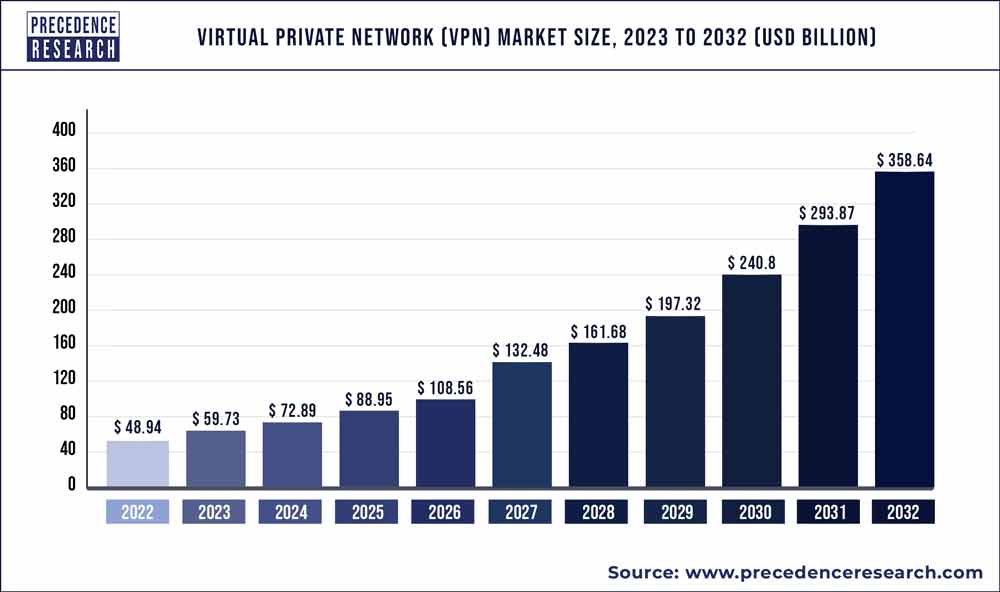
As shown in the above graph, the global virtual private network (VPN) market was valued at approximately USD 48.94 billion in 2022 and is expected to grow at a compound annual growth rate (CAGR) of around 14.7% from 2021 to 2030. North America held the largest market share in 2020, driven by advanced technology adoption and high internet penetration. The increasing adoption of VPNs across sectors such as healthcare, BFSI (Banking, Financial Services, and Insurance), and IT & telecom is a significant driver of market growth. These trends reflect a rising demand for secure and private internet browsing solutions amid increasing cyber threats and data breaches globally.
Top 5 Reasons you need a VPN:
1. Protect Your Data from Hackers
Cybercriminals are constantly finding new ways to intercept and steal sensitive information. Public Wi-Fi networks, in particular, are hotspots for cyber attacks. Without a VPN, your data can be easily accessed by hackers. NordVPN encrypts your internet connection, making it virtually impossible for anyone to intercept your data.
2. Maintain Your Privacy
Your internet service provider (ISP) can track your online activities and even sell this data to third parties. Government surveillance agencies can also monitor your online behavior. A VPN masks your IP address, ensuring that your browsing habits remain private and anonymous. NordVPN's strict no-logs policy guarantees that your online activity is not recorded or stored.
3. Bypass Geo-Restrictions
Many websites and online services restrict access based on your geographic location. This can be frustrating when trying to access content that is available in other countries. NordVPN allows you to connect to servers worldwide, bypassing geo-restrictions and providing access to content from different regions.
4. Prevent Bandwidth Throttling
ISPs often throttle your internet speed based on your online activities, such as streaming or gaming. This can lead to slower speeds and a frustrating online experience. By using NordVPN, your ISP cannot see what you are doing online, preventing them from throttling your bandwidth and ensuring a smoother internet experience.
5. Secure Remote Work
With the rise of remote work, securing your connection to company resources is crucial. A VPN creates a secure tunnel for data transmission, protecting sensitive business information from being accessed by unauthorized parties. NordVPN provides a reliable solution for remote workers, ensuring that their connections are safe and secure.
6. Enhanced Website Security
If you own a website, protecting it from cyber threats is essential. Cyber attacks can lead to data breaches, downtime, and loss of customer trust. NordVPN adds an extra layer of security, protecting your website from malicious activities and ensuring its reliability.
The Hosting Australia Recommendation
At Hosting Australia, we are committed to providing our clients with the best tools to enhance their online security and privacy. We believe that NordVPN is an essential tool for anyone looking to protect their digital life. Its robust features, user-friendly interface, and commitment to privacy make it the ideal choice for securing your online presence.
Don't leave your online security to chance. Get NordVPN today and take control of your digital privacy. Protect your data, secure your connections, and enjoy the peace of mind that comes with knowing your online presence is safeguarded.
Visit our store at Hosting Australia for more information and to purchase NordVPN. Secure your digital life now and experience the benefits of enhanced online security and privacy with NordVPN.
Selecting the perfect web hosting plan is crucial for the success of your website. The right hosting plan ensures that your site runs smoothly, handles traffic efficiently, and remains secure. However, with so many options available, making a decision can be daunting. This guide will help you understand the different types of hosting and what to consider when choosing the best plan for your needs.
1. Understand Different Types of Hosting
Shared Hosting: Ideal for small websites or blogs with low traffic. Multiple websites share the same server resources, which keeps costs low but may affect performance if one site experiences a traffic spike. VPS (Virtual Private Server) Hosting: Offers more control and resources than shared hosting. Each website resides on a virtual server that mimics a dedicated server, providing better performance and security.
2. Evaluate Your Website's Needs
- Traffic Levels: Estimate your website's traffic. A new blog may not need much bandwidth, but an e-commerce site with thousands of visitors will require a robust hosting plan.
- Technical Requirements: Determine the software, applications, and frameworks your website will use. Ensure the hosting plan supports them.
- Scalability: Consider whether you need a hosting plan that can grow with your website. VPS hosting offers good scalability options.
- Security: Assess the level of security features offered by the hosting plan. Websites handling sensitive information need robust security measures.
- Budget: Hosting plans vary widely in price. Set a budget and find a plan that offers the best value for your needs.
3. Compare Hosting Features
- Storage and Bandwidth: Ensure the plan offers enough storage and bandwidth for your current needs and future growth.
- Uptime Guarantee: Look for a hosting provider with a high uptime guarantee (99.9% or higher) to ensure your website remains accessible.
- Customer Support: Reliable customer support is crucial.
- Control Panel: A user-friendly control panel, like cPanel or Plesk, makes managing your hosting account easier.
- Backup and Restore: Check if the hosting plan includes regular backups and easy restore options.
Our Hosting Solutions
At Hosting Australia, we offer a variety of hosting solutions tailored to meet different needs:
1. cPanel Hosting or Plesk Hosting
- Perfect for small blogs and personal websites. Affordable and easy to manage.
2. VPS Hosting
- Provides more control and resources for growing websites. Scalable and secure.
By understanding your website's needs and comparing hosting features, you can select the perfect hosting plan to ensure your site’s success. Our tailored hosting solutions provide the reliability, performance, and support you need to thrive online.
In a digital age dominated by technology, the alarming rise of cybercrime has surpassed all expectations, reaching a staggering annual cost of $8.15 trillion. This figure, unveiled by a recent Statista Market Insights survey, not only dwarfs the revenues of the world's largest corporations but also underscores the pervasive threat posed by cybercriminals to businesses and governments worldwide.
To put this colossal sum into perspective, consider this: cybercrime's annual income outstrips that of behemoths like Woolworths, Coles, Amazon, Apple and Pfizer combined. While these corporate giants collectively rake in over $2 trillion, cybercrime's illicit economy looms ominously, casting a shadow over the digital landscape.
The $8.15 trillion encompasses the damages wrought by a myriad of cyberattacks, ranging from ransom payouts and lost productivity to system downtimes and data theft. What was once perceived as a fringe activity has now evolved into a highly sophisticated global enterprise, with cybercriminals leveraging advanced techniques and collaborative networks to wreak havoc on unsuspecting victims.
Carlos Salas, a cybersecurity expert at NordLayer, emphasizes the evolution of cybercrime, stating, "Some still believe a typical hacker is just a guy wearing a hoodie in a dark room. But that isn’t true anymore. Cybercrime has evolved into a professionalized global enterprise with skilled hackers, nation-state backed groups, and organized cybercrime rings working in tandem."
The modus operandi of cybercriminals revolves around two primary illicit business models: selling stolen data on dark web marketplaces and executing ransomware attacks. These nefarious activities involve infiltrating systems to pilfer personal and financial data, including login credentials and corporate secrets, which are then peddled to other threat actors, fueling crimes like identity theft, payment fraud, and corporate espionage.
Ransomware, in particular, has emerged as a potent weapon in the cybercriminal arsenal, allowing hackers to encrypt an organization's systems and data, effectively holding them hostage until a ransom fee is paid. The repercussions of ransomware attacks have been felt across diverse industries and governmental bodies, with cybercriminals extorting millions in ill-gotten gains. What was once a clandestine operation has now transformed into a lucrative criminal enterprise, with ransomware operators leasing malware and orchestrating ransom negotiations through sophisticated infrastructures.
Carlos Salas sheds light on the allure of cybercrime, stating, "With relatively low entry costs but higher income than traditional crimes, it’s no surprise cybercrime has become such an attractive criminal pursuit. There’s less physical risk than, say, burglary or armed robbery. With so much valuable data and systems to target across businesses, cybercrime has become a highly profitable illegal industry."
As the digital landscape continues to evolve, the battle against cybercrime intensifies. Businesses and governments must remain vigilant, investing in robust cybersecurity measures and fostering collaboration to thwart the ever-evolving tactics of cybercriminals. Only through collective action and unwavering commitment can we hope to stem the tide of cybercrime and safeguard the digital realm for generations to come.
Being mindful of potential risks to your personal details, vetting providers and the use of products such as Site Lock, robust and intelligent spam filtering services or SSL Certificates can assist you and your clients to stay safe online and avoid being trapped by online criminal organisations.
Get in touch with Hosting Australia today to discuss your options.
In today's digital landscape, the security of a website is paramount. With cyber threats evolving constantly, web hosting providers must prioritize security features to safeguard their clients' data and ensure uninterrupted service. Whether you're running a personal blog or managing a large e-commerce platform, choosing a web hosting provider equipped with robust security measures is essential. Here are some top security features every web hosting provider should offer:
SSL/TLS Encryption: Secure Sockets Layer (SSL) or Transport Layer Security (TLS) encryption is fundamental for protecting data transmitted between the user's browser and your website's server. A reputable web hosting provider should offer free or affordable SSL/TLS certificates to encrypt sensitive information such as login credentials, payment details, and personal information.
DDoS Protection: Distributed Denial of Service (DDoS) attacks can cripple a website by overwhelming it with a flood of fake traffic. Effective DDoS protection mechanisms implemented by the hosting provider can mitigate such attacks, ensuring your website remains accessible to legitimate users even during periods of high traffic or attack.
Web Application Firewall (WAF): A Web Application Firewall (WAF) acts as a barrier between your website and malicious traffic, filtering out potentially harmful requests and preventing attacks such as SQL injection, cross-site scripting (XSS), and other common vulnerabilities. A hosting provider offering a robust WAF can significantly enhance the security posture of your website.
Regular Backups and Restore Options: Data loss can occur due to various reasons, including cyber attacks, hardware failures, or accidental deletions. A reliable web hosting provider should offer automated and regular backups of your website data. Additionally, easy-to-use restore options empower website owners to quickly recover their data in the event of an incident.
Malware Detection and Removal: Malware infections can compromise the security and integrity of your website, leading to data breaches and reputational damage. A web hosting provider should employ malware detection tools to scan for malicious code and promptly remove any threats detected. Regular malware scans help prevent infections and ensure a clean online environment for your visitors.
Secure File Transfer Protocols: Secure file transfer protocols such as SFTP (SSH File Transfer Protocol) and FTPS (FTP over SSL/TLS) provide encrypted channels for uploading and managing files on your web server. Hosting providers should support these protocols to facilitate secure file transfers, reducing the risk of unauthorized access to sensitive data.
Server Hardening and Patch Management: Servers hosting websites should undergo regular hardening measures to minimize potential vulnerabilities. This includes applying security patches promptly, disabling unnecessary services, implementing access controls, and enforcing strong password policies. A proactive approach to server management helps prevent security incidents and ensures a stable hosting environment.
Two-Factor Authentication (2FA): Two-Factor Authentication adds an extra layer of security to your website by requiring users to verify their identity using a second factor, such as a mobile device or authenticator app, in addition to their password. Hosting providers offering 2FA support empower website owners to better protect their accounts from unauthorized access.
In conclusion, the security of your website is a critical aspect that should not be overlooked when selecting a web hosting provider. By prioritizing security features such as SSL/TLS encryption, DDoS protection, WAF, regular backups, malware detection, secure file transfer protocols, server hardening, patch management, and Two-Factor Authentication, hosting providers can offer a robust defense against cyber threats and ensure the safety and integrity of your online presence. When evaluating hosting options, it's essential to inquire about these security features to make an informed decision that aligns with your website's security requirements. Remember, investing in a secure web hosting provider is an investment in the protection of your website and its visitors' data.